May 14, 2014

Recommended short trip from Fukuoka: Yanagawa, a small river town full of charm

みなさん、こんにちは!
Hi everyone!

Since my husband is from Kagoshima, the southernmost prefecture of the Kyushu Island, I have visited south Kyushu many times, but I had never had chance to go to Fukuoka located in the northeastern part of the island, until last month. My impression? It was lovely!! If possible I seriously want to live there at least for a couple of years.

What delighted me the most was foods. Despite being the biggest city on the island, Fukuoka is blessed with nature's bounty. In the center the city, such as Nakasu and Tenjin, there are so many restaurants, bars, food stalls called "yatai" that offer you great local foods using fresh ingredients.


I'm sure Fukuoka would be a nice place to live, but I have to say there are not too many touristic spots to see. Tourists usually take an excursion to Dazaifu City known for the famous Dazaifu Tenmangu shrine dedicated to the deity of learning. It is not a bad idea at all, however, I personally prefer Yanagawa (柳川), less than an hour by car from central Fukuoka.

Look! Isn't it nice? Called "town of water," Yanagawa has a 470-km network of waterways that were originally irrigation ditches.


To explore this small lovely castle town, taking a cruise by "donkobune" dinghy is the best way.  It is very relaxing and enjoyable.


You don't need to make a reservation in advance. Find a boat at a landing place and ask a boatman if you can ride, saying 「乗れますか (Noremasuka?)」 meaning "Can I (or we) get on?

If s/he says "Yes," get on the boat and pay the fee to a lady who comes to collect money. We paid 1,000 yen per person for a 40 min. cruise, but the fee is different depending on the company and the length of the boat trip.

There are no fixed departure time for the trip. Normally the boat leaves when about 10 people get on board. We waited for other people to join the trip for nearly 15 minutes but no one else came for some reason. As a result, my husband and I became the only passengers on the boat. I thought we were just lucky, but the same thing may possibly happen if you go there on a weekday, when there are fewer tourists.


This is our boatman. While deftly maneuvering the boat, he explained the history of the town, the buildings seen from the boat, etc., but I could not understand only a half of what he said because of his mumbling voice. 

He occasionally sang songs to entertain us. Actually, singing seemed like an obligation to all the boatmen, but not all of them are good singers. Our boatman was ok, not great though. 


Every time the boat goes under the bridge, all the passengers have to put their heads down. Some bridges are dangerously low, but don't worry, I have never heard of fatal accidents.

The specialty of Yanagawa is unagi or freshwater eel, grilled after being dipped in the sweet soy sauce. It is served with steamed rice in the square lacquered box like the photo below. The yellow thing is thinly sliced egg. I don't remember exactly how much it was, but it was around 2,500 yen with a bowl of soup.


If you still have time, why don't you visit Ohana (御花), why don't you visit the residence and garden of the feudal daimyo family, the Tachibanas? The white house below is the guest house built in 1910. The admission is 500 yen. 


To go to Yanagawa by train, take the Nishitetsu Tenjin Omuta line (西鉄天神大牟田線)from Nishitetsu Fukuoka Station (西鉄福岡駅), and get off at Nishitetsu Yanagawa station (西鉄柳川駅). About 45 minutes by super-express train (特急). 

ここからは日本語で。

九州は南の方は何度も行ったことがありますが、福岡は先月まで行ったことがありませんでした。

福岡、いいところでした。何と言っても、食べ物がおいしいんです。九州で一番の都会でありながら、郊外には豊かな自然が広がっていて、新鮮な材料が手に入りやすいのでしょうね。

福岡は食事やショッピングには最高ですが、観光が楽しめるところはそれほど多くありません。

なので、観光客は有名な大宰府天満宮がある大宰府市に出かけます。でも福岡からの遠足なら、私は柳川の方が好きですね。

柳川は自動車で一時間足らずで行くことができる「水の町」。かつて用水路として町中に掘られた水路に、今は観光客を乗せた「どんこぶね」と呼ばれる小さな船がたくさん浮かんでいます。

私も乗りましたが、本当にリラックスできて楽しいのですよ。船頭さんが歌を歌ったり、町の説明をしてくれます。

お腹が空いたら、お昼は有名な「鰻の蒸篭蒸し」を食べましょう。実際のところ、これ以外のものを食べるほうが難しいかもしれません。

時間があれば、「御花」で柳川藩主立花家の邸宅と庭園 の見学はいかがでしょうか。

小さいけれどのんびり出来る魅力的な城下町。それが柳川です。福岡に行くことがあったら、ぜひ足を伸ばしてください。


Apr 30, 2014

The view you must NOT miss in Kyushu 1: a magnificent wisteria tunnel of Kawachi Fujien

みなさん、こんにちは!
Hi everyone!

I just came back from a short trip of Kyushu Island, the southernmost (westernmost?) of the four main islands of Japanese archipelago.

A coupe of days before the trip, I happened to see a breathtakingly beautiful photo in a book of a wisteria tunnel, entitled "One of the superb views you must see in Japan."

I instantly decided to visit there, as I happened to have a plan to stay one night in Fukuoka City, which is not too far from the private wisteria garden, named Kawachi Fuji-en (河内藤園).

Located in the midst of mountains of Kitakyushu City, the wisteria garden is not openly advertized, because the garden's owner is worried that too many visitors may cause the damage of the trees, even if they don't do any harm intentionally.

Even so,  this hidden touristic spot is becoming known in recent years by word of mouth, and I heard that it is very busy when the wisterias are at their best.

Well, do you want to know how I liked it?

Unfortunately, the day I visited was a bit too early and only about 30 percent of flowers were in bloom.

The entrance fee differs from 300-1,000 yen depending on flowering situation of wisterias, and they charged us only 600 yen.

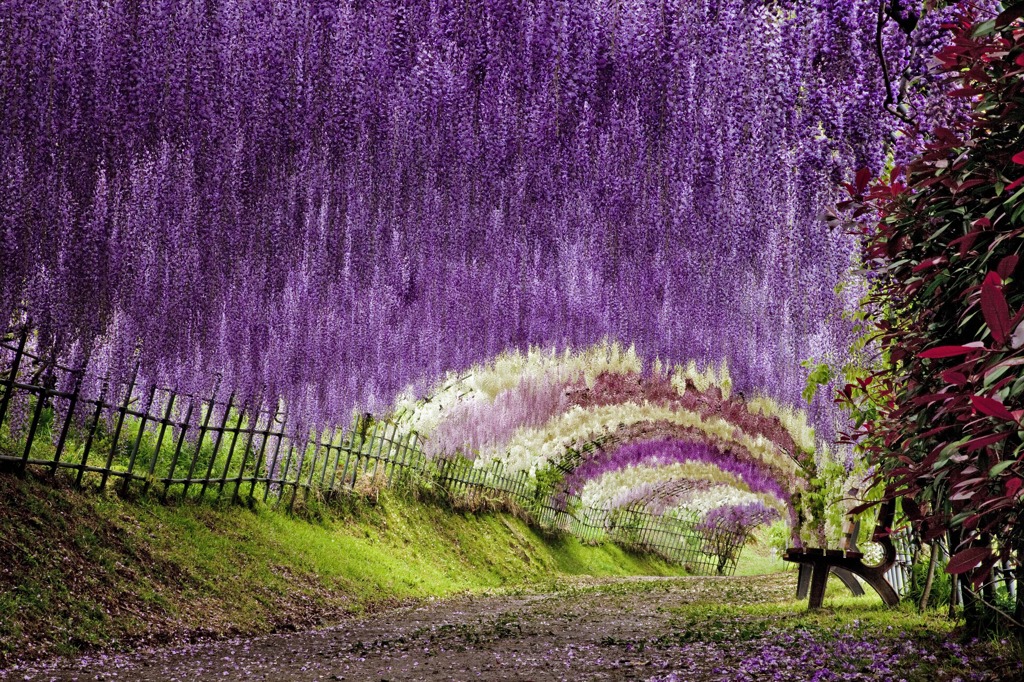
But look! Not too bad, is it?


In the 6,100 sq.-meter garden 22 kinds of wisterias have been planted. There are two wisteria tunnels, 80 meters and 220 meters respectively. 


This is the inside of the wisteria tunnel. Since wisteria clusters start flowering from the top, two thirds from the bottom were still in bud, but their best time will come very soon -- maybe in a couple of days if the weather is nice. 

If you are luckily planning to travel in the north part of Kyushu island in May, you'll see the wisterias in profusion like the photo below.

春の終わり
http://photohito.com/photo/578008/

If you want to have a picnic under the flowers, bring your own food into the garden. Don't expect to buy something on the spot. There are no shops, no cafés and no vending machines near the garden.

There are some rules you have to follow
1) Don't touch the trees or stand on the roots.
2) Don't leave your garbage.
3) Don't bring your pets into the garden.
4) Don't take photos using tripods on the paths including tunnels, but you can use them at the grand trellis.

Address: 2-2-48 Kawachi, Yahatahigashi-ku, Kitakyushu-shi, Fukuoka Prefecture
tel: 093-652-0334
Open 9 a.m.-6 p.m.

If you have a car with GPS, you will have no problem, but it is hard to get there by public transport. If you don't want to rent a car, take a taxi from JR Yahata Station, and ask the driver to come back later, since it is almost impossible to hail a taxi near the garden.

Here are useful expressions

1) 河内藤園までお願いします。  Kawachi Fuji-en made onegaishimasu  (To Kawachi Fujien please)


2) X時ごろまた来てもらえますか。 ~ji goro mata kite morae masuka?  (Would you please come back around X o'clock?)

ここからは日本語で。
From here I'll write in Japanese.

先日九州旅行から帰ってきました。

先日 (senjitsu)  the other day
九州 (Kyushu)
旅行 (ryoko)  travel

北九州市の河内藤園に行ってきましたよ。

北九州 (Kitakyushu)
市 (shi)  City
河内藤園 (Kawachi Fujien)  Kawachi Wisteria Garden

旅行の数日前に偶然この藤園のことを知って、行くことを決めましたが、残念なことに、まだ見ごろには少し早かったようです。

偶然 (guzen)  happen to (know)
決める (kimeru) to decide
残念(zannen)なことに unfortunately
見ごろ (migoro)  best time

数日後には満開になるはずなので、九州旅行を計画している人は、検討してみてください。
数日後 (sujitsu go)  in a few days
満開 (mankai)  be in full bloom
計画(keikaku)する  to plan
検討(kento) する to consider

この藤園は宣伝していませんが、今では絶景として有名で、訪れる人が大勢いるそうです。

藤園 (fujien)  wisteria garden
宣伝 (senden) する to advertise
絶景 (zekkei)  a superb view
訪れる (otozureru)  to visit
大勢 (ozei) many

ただ、行くのが難しいので、カーナビ付きの車を借りるか、タクシーに乗ったほうがいいです。

ただ but
難しい (muzukashii)  difficult
カーナビ GPS
~付き (tsuki) equipped with
借りる (kariru) to rent
乗る (noru)  to take

Apr 24, 2014

Gotemba Premium Outlets: huge mall you can enjoy shopping and Mt. Fuji!

Hi everyone!
みなさん、こんにちは!

As everybody knows, Mt. Fuji is a symbol of Japan. I was very happy when this perfect shaped volcano was officially registered as a UNESCO World Heritage site last year.

Mt. Fuji, 3,776 meters high, is the highest mountain in Japan, and can be seen from many parts of Tokyo when the sky is clear. If you have a chance, however, try to see it from somewhere closer and you'll understand why this mountain has been so special to Japanese since ancient times.  

Do you want to stand on the summit of Mt. Fuji? Of course it is possible. Actually more than 200,000 hikers (in recent years about 300,000) including not a few foreign tourists and not-very-young people try to climb every year, and many of them succeed to reach the top.

But remember, you need to have stamina and be properly clothed and equipped. You can go up to the fifth station of the mountain by car, but from there you have to climb on foot. There are neither cable cars nor rope ways that take you to the top.

Moreover, Mt. Fuji is basically open to the general public only in July and August, which means most mountain huts are closed for the rest of the year. Even in mid-summer the temperature near the summit often goes down to 0℃.

Some experienced mountaineers climb in the off-season when the mountain is covered with snow, but it is very dangerous for amateurs to do the same thing. Even if you have problems in the mountain, no one will help you.

So, for the time being, why don't you enjoy shopping at Gotemba Premium Outlets mall, situated on the foot of the Mt. Fuji? I took these two photo below in late March from the mall. Aren't they nice?


On the vast site area (403,100 sq.meters) of this shopping mall, there are 210 stores where you can buy all the items at a 25~60 percent discount all year around. The stores include many high brands such as Armani, Chloe, Dior, Dolce & Gabbana, Gucci, Issey Miyake, Paul Smith, Ferragamo and Valentino. You can find a shop list on their English site here.

You may think it is a bit too far to get there from Tokyo, but it takes only 70-80 minutes by car. If you don't have a car, you only have to take a direct bus from major stations (Tokyo, Shinjuku, Shinagawa, Tama Center,  Chofu, Yokohama, etc) . The fee is different according to the bus company but usually around 3,000 for a round trip per adult passenger, and a reservation is required. For further info. about how to get there, click here.

Gotemba Premium Outlets
Address: 1312 Fukasawa, Gotemba-Shi, Shizuoka
Hours:  March-November,10 a.m.- 8 p.m.
          December-February,10 a.m.-7 p.m.
          Closed on 3rd Thursday in February.

ここからは日本語で。

富士山は高さ3,776メートル、日本で一番高い山です。


富士山 (ふじさん) Mt. Fuji


去年ユネスコの世界自然遺産に登録されました。

世界自然遺産(せかいしぜんいさん) World national heritage
登録 (とうろく)する  to register

以前から年間約20万人の人が富士山に登っていましたが、去年からは30万人に増えました。

以前 (いぜん)  before
年間 (ねんかん) annually
登る (のぼる) to climb
増える (ふえる) to increase

お年寄りも多く登っているので、簡単な山のように思うかもしれませんが、登山には体力も装備も必要です。

お年寄り (おとしより) old people
簡単 (かんたん) easy
登山 (とざん) mountain climbing
体力 (たいりょく) stamina
装備 (そうび) equipment
必要 (ひつよう) necessary

それに、一般の登山者は7月と8月しか富士山に登ることができません。

一般の (いっぱんの) ordinary
登山者 (とざんしゃ) mountaineers

その他の月は雪が多く、山小屋が閉まっているので、危険なのです。

雪 (ゆき) snow
山小屋 (やまごや) mountain huts
閉まる (しまる) to close
危険 (きけん) dangerous

ですから、近くから富士山を見たいだけなら、富士山のふもとにある御殿場プレミアムアウトレットでショッピングをしながら山を眺めたらどうでしょうか?

御殿場 (ごてんば) Gotemba
ふもと foot 
眺める (ながめる) take  a look

店の数は高級ブランド店も含めて210。いつでも25~60パーセント・オフで買い物をすることができますよ!

高級 (こうきゅう) ブランド high brand
含めて (ふくめて) including

東京からも車で70分ぐらいで行くことができますし、車がなくても大きい町からならバスが出ています。詳しくはウェブで調べてみてね。

詳しくは (くわしくは) for further information
ウェブ website
調べる (しらべる) check


Apr 1, 2014

Sakura is in full bloom!

Hi everyone!
みなさん、こんにちは!

Last time I wrote sakura (cherry blossoms) had just started blooming, It is now in full bloom!

Look! This is the photo I took from my balcony. It is fortunate that some sakura trees have been planted right in front of my place.


In this season sakura trees lining the streets make flower tunnels.  The photo below was taken in my neighborhood. Beautiful, isn't it?


We cannot enjoy this scenery long, though. Weather forecast says it will rain Friday in Tokyo region and make flowers fall. After that the trees will be covered with green young leaves. 

If you are planning to have a cherry-viewing party, be quick! You don't have to go very far. Luckily, sakura is everywhere in Japan.

ここからは日本語で。

前回、桜が開花したと書きましたが、今日はもう満開です!

前回 (ぜんかい) last time
桜 (さくら) cherry blossoms
開花 (かいか) to bloom
満開 (まんかい) be in full bloom

今一番良い時期なので、近所で撮った写真を載せました。

時期 (じき) time
近所 (きんじょ) neighborhood
撮る (とる) to take pictures
載せる (のせる) to put up

上の2枚はうちのベランダから、3枚目の桜のトンネルの写真は車の中から撮りました。きれいでしょ?

枚 (まい) counter for something thin, like pictures

天気予報によると、東京は金曜日は雨のようです。

天気予報 (てんきよほう) Weather forecast

雨が降ると桜が散ってしまいますので、お花見を企画している人は急いで!幸運なことに、桜はどこでも見られますから。

散る (ちる) to fall
お花見 (おはなみ) flower-viewing party
企画 (きかく) plan
急ぐ (いそぐ) to hurry
幸運(こううん) lucky


Mar 27, 2014

Five most popular cherry viewing spots in Tokyo

Hi everyone.
みなさん、こんにちは!


This winter was unusually long. Until just a week ago we couldn't go out without a thick down jacket and a scarf, but it is getting warm all of a sudden. Today the temperature reached 20℃! Very strange. Is it one of the effects of global climate change?

We had thought sakura (cherry blossoms) would not bloom till early April but buds are rapidly growing, and the Japan Meteorological Agency announced on the 25th the first bloom of sakura in Tokyo region, and you can probably enjoy flower viewing this weekend.

Hurry up! Don't miss the chance. The life of cherry blossoms are very short, usually lasting only a week and often only a couple of days depending on the weather. Cherry flowers are so delicate that they fall easily due to rain and strong winds. 

Why do Japanese love cherry blossoms so much?


Good questions! Sakura (please let me call this flower in Japanese) is our national flower and it has been loved since ancient times. Many poems and songs with the theme of sakura
have been created.

Our ancestors who were living with wars and seeing many ruling powers rise and fall understood that nothing could stay the same. They repeatedly wrote in literature that life was ephemeral. Therefore, short-lived sakura that gorgeously blooms and gracefully falls is the flower that best represented their philosophy about life. -- I was taught that way, but I'm not really sure about it.  
It is true that many of us have a sentimental attachment to sakura, though. As Japanese school year starts in April and ends in March, the very sakura season, when we see the pink flowers, we instantly remember the sadness of separation from old school days and anticipation for new life.

What is the kind of cherry tree most commonly seen in Japan? 


Actually there are many kinds of cherry trees in Japan, but "sakura" usually refers to cultivar called Somei Yoshino, which can be most commonly seen in Japan. .

Its flowers are pale pink, almost pure white. According to popular belief,  Somei Yoshino is an artificial hybrid developed in the 19th century from a single tree, which means all the existing Somei Yoshino trees are the clones of the original tree. Some say this can explain why sakura trees in the same region start to bloom at the same time. Well, what do you think?

Let's do hanami, flower-viewing party!


Hanami (花見) literally means flower viewing but this also refers to "picnic party under the cherry trees."  It is a seasonal event Japanese have practiced for centuries, and you should try just for once, because it is so much fun and relaxing.

In popular sakura-viewing places, however, staking out a good spot is such a tedious work. Arriving only a few hours before the party time is too late. There are so many crazy people who spread out a blue picnic sheet (water-proof!) in the early morning for the evening party, waiting for hours for other members to come. It is often the first mission of new employees who have just joined the company in April.

If you'd like to check out what Japanese flower viewing is like, visit Ueno Park in Tokyo. You'll see thousands of people enjoying hanami party, drinking alcohol, singing with portable karaoke machines (frankly, I hate those noisy people singing karaoke in public) , etc.

5 most popular Hanami Spots in Tokyo area


Ueno Park (上野公園 Ueno Koen): Probably most popular hanami spot in Tokyo. Only 5 minutes from JR Ueno Station. About 800 sakura trees. The park is open till 11 p.m., but paper lanterns light 5:30- 8 p.m. There are national museums and a zoo in the park. Bringing in alcohol allowed. Address: 5-10 Ueno Koen, Taito-ku, Tokyo; tel: 03-3828-5644

Shinjuku Gyoen National Garden (新宿御苑 Shinjuku Gyoen) : Originally a part of the site of a private mansion of Lord Naito, a feudal lord of the Edo Period. In the site of 58.3 ha (144 acres) 1,300 cherry trees of 65 kinds are planted. You can have a picnic under the trees but alcohol is prohibited in the park. More quiet than Ueno Park. Admission is 200 yen for adults, 50 yen for elementary and junior high schools students. 5 minutes from Shinjuku Gyoen Station on the Tokyo Metro subway line, JR Sendagaya Station. Open 9 a.m.-4 p.m. Address: 11 Naito-cho, Shinjuku-ku, Shinjuku, Tokyo; tel: 03-3350-0151 English website

Chidorigafuchi Park (千鳥ヶ淵 Chidorigafuchi):  700-meter long Chidorigafuchi Pedestrian Path with 170 cherry trees between Hanzo Moat of the Imperial Palace and Uchibori Dori Street. 3minutes from Exit No.3 of Hanzomon Station of the subway Hanzomon Line. You can enjoy a rowboat ride on the moat of the Imperial Palace, looking up cherry blossoms. During the cherry blossom seasons March 28-April 4, boats are available 9:30 a.m.-8 p.m. for 800 yen (30 minutes).  For further information, contact Chiyoda City Tourism Association at 03-3556-0391

Meturo River (目黒川 Megro-gawa) : About 800 cherry trees along the 3.8 km Sumida river, lit up at night April 1-10, 6-9 p.m. Sakura Festival will be held on April 6. 2 minutes from Meguro Station on the Tokyu Toyoko Line.

Sumida Park (墨田公園 Sumida Koen): well-known sakura viewing spot since the Edo Period. 660 cherry trees along the Sumida River will be lit up during Sakura Festival period, March 29-Aril 6. 5 munutes from Asakusa Station on the Tokyo Metro subway line and Tobu Line. For more information, Sumida Tourist Association at 03-5608-6951.

If you want to avoid over-crowded spots,  why don't you go to old cemeteries? Some places such as Aoyama Cemetery (2-2-2 Minami Aoyama, Minato-ku, Tokyo, 7 minutes from Gaien-mae Station on the Ginza subway line, 9 minutes from Aoyama Itchome Station on the Hanzomon, Oedo, Ginza lines) or Yanaka Cemetery (7-5-24 Yanaka, Taito-ku, Tokyo, 6 minutes from JR Nippori Station), are well-known for beautiful cherry blossoms, and surely less busy.

Long time ago I went to Aoyama Cemetery for hanami after work. That was the idea of my ex-colleague (he was American). I was very reluctant, but to my surprise, there were unexpectedly many people having a party, sitting in front of the gravestones of someone they didn't know at all. Drinking sake in a cemetery at night -- kind of exciting, no?

ここからは日本語で。

今日の最高気温は20度でした!急に暖かくなりましたね。
最高気温 (さいこうきおん): highest temperature
暖かい(あたたかい): warm
 
今年は桜の開花が遅いかもしれないと思っていましたが、25日には気象庁が東京の開花宣言をしました。週末は花見が楽しめそうです。

桜 (さくら) cherry blossoms 
開花 (かいか): blooming
気象庁 (きしょうちょう): The Japan Meteorological Agency
開花宣言 (かいかせんげん): announcement of blooming  

桜は昔から日本人に愛されてきました。桜はあっという間に散ってしまいますが、そこがはかない美を愛する日本人の感性に合っているのかもしれません。桜の時期に入学式や卒業式が行われるのも、桜に特別な感情を持つ理由でしょう。

昔 (むかし): ancient times
愛する(あいする): to love
あっという間(ま)に: very short time
散る (ちる): to fall
はかない: ephemeral
美 (び): beauty
感性 (かんせい): sensitivity
時期(じき): time
入学式 (にゅうがくしき): entrance ceremony
卒業式(そつぎょうしき): graduation ceremony
特別な (とくべつな): special
感情 (かんじょう): feeling
  
日本で最もよく見られるのはソメイヨシノです。人工的に作られた品種で、全てのソメイヨシノは1本の木のクローンだと信じられていますが、実際はどうなのでしょうか。

最も(もっとも): most
人工的に (じんこうてきに): artificially
品種 (ひんしゅ): cultivar
全て (すべて): all

花見とは単に花を見るだけではなく、木の下で宴会をすることでもあります。

単に (たんに): simply
宴会 (えんかい): party, dinner

楽しいので、ぜひ試してもらいたいですが、場所取りは大変ですよ。朝早くから夜の宴会のために場所取りをしている人もいます。

試す (ためす): to try
場所取り (ばしょとり): staking out a place

Mar 14, 2014

Japanese souvenir suggestions 3: Manekineko (lucky cats) that brings you luck!

Hi everyone!

About two weeks ago I found  a nice black manekineko (lit. beckoning cat) at a nearby department store.  I had never been interested in those ceramic cat figurines that are believed to bring you luck, but my eyes were glued on that particular cat for  some reason I can't explain.  

I came back home without buying it. Usually I lose my desire to shop while sleeping at night, but the next morning I still wanted it and even regretted not having bought it. When I went back to the store and saw it sitting on the shelf, I was very relieved.

This is the lucky cat I bought for the first time in my life. Do you think it is cute or bizarre?


Unlike orthodox manekineko, this cat may look a little avant-garde, but it is actually traditional Kutani (九谷)style. Kutani ware is porcelain produced in Kanazawa City, characterized by its vivid colors. The whole body of Kutani manekineko is fully adorned with colorful tatoo like patterns called "mori" 

As I already mentioned before, it is widely believed that the right paw raised  brings you good luck, while the left paw raised will invite in customers.

The colors also have meanings: white cats represent good luck, black ones good health and yellow (or gold) cats fortune. Nowadays there are also red, purple, green and pink cats, but I don't think these new colors are very popular yet.

Since this lucky cat came to my home, nothing lucky has occurred yet, but he brought an another manekineko.

Last week I visited my old parents living not too far from my home. When I told my mother that I had bought a manekineko, she said, "Actually, we have an old manekineko someone gave it to us decades ago. It is rather big and takes up space. We'd like to get rid of it, but can't throw it in a trash can because it is a talisman. Please take it home."

Then she brought a white manekineko with a huge head and big eyes from the lumber room. I wasn't particularly attracted to this cat, but my mother persistently persuaded me to take it, and I gave in.  Sigh... Mom, it is a bit too big (30cm tall) .

This is the photo of my second manekineko. Produced in Tokoname, one of the main pottery towns in Aichi Prefecture, this type is "the manekineko" most Japanese would imagine. Don't worry, kitty. I won't throw you away, so bring me good luck!


Come to think of it, manekineko may be a nice souvenir. There is a wide variety in shape, style, size and price. Recently there are even battery-powered manekineko that move the paw slowly. I'm sure you'll probably find the one you like.

Where can you buy manekineko?

Asakusa area (Tokyo)
 

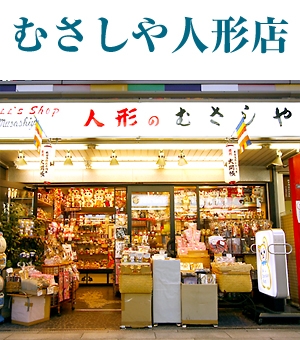
Musashiya: Located on a Nakamise shopping street that leads to Kaminari-mon (the famous gate of Sensoji temple with a huge lantern) to the main hall of the temple. Open daily, 11 a.m.-7 p.m. , tel: 03-3841-5451  Asakusa's Sensoji-temple is a very famous touristic spot you should not miss. Even if you cannot find anything that pleases you, you can take a nice stroll in this traditional area.


Orner Koide:  Located in Kappabashi, near Asakusa. address: 3-1-15 Matsugaya, Taito-ku, Tokyo, tel: 03-3843-2571,  open 10 a.m.-5:30 p.m., closed Sun. & holidays. They are dealing with not only manekineko but other talismans. You'll probably find funny stuffs there. Their store items are also avilable through the Internet http://www.rakuten.ne.jp/gold/manekineko-orner/ (Japanese only) 

Yanaka (Tokyo)
店舗外観店内①


Kaiun Yanakado: Address: 5-4-3 Yanaka, Taito-ku, Tokyo, tell: 03-3822-2297, Open caily, 10:30 a.m.-5:30 p.m., 6 minutes on foot from Sendagi Station (Exit No. 1) on the subway Chiyoda Line. Sales point: Located in the lovely Yanaka town, less touristy than Asakusa. If you visit there in cherry blossom season (early April), you can enjoy nice flower viewing at a nearby Yanaka cemetery (don't worry, there's no spooky atmosphere). 

Kyoto
Hyotanya075-561-81: Located in Kyoto, on the well-known Sannen-zaka street that leads to Kiyomizu Temple. Many hyotan (gourds)  are hung at the store front. Address: 3-317 Kiyomizu, Higashiyama-ku, Kyoto. You can stop by there on the way to (or from ) Kiyomizu Temple, one of the must-not-miss spots in Kyoto.

Seto City, Aichi

Omodakaya: Located in Seto, one of the major pottery tows in Aichi Prefecture. Address: 3 Yakushi-cho, Seto City, Aichi, tel & fax: 0561-87-1700, open 10a.m.-5 p.m., closed Tuesdays, year-end and new year's holidays. Next to the shop, is Manekineko Museum, where thousands of valuable maekineko are displayed. You can also make your own cat by painting pre-made ceramic figurines.


おもだか屋店内 

はい、ここからは日本語で。

最近、近くのデパートで黒い招き猫を買いました。

最近 (さいきん)  recently
招き猫 (まねきねこ)  beckoning cat, lucky cat

今まではそんなに招き猫に興味がなかったのですが、一目見て、欲しくなってしまったのです。

興味 (きょうみ)  interest
一目 (ひとめ)  a single glance
欲しい (ほしい) to want

招き猫は江戸時代から作られるようになった「福を招く」と言われている置物です。

江戸時代(えどじだい)  Edo Period
福 (ふく)  luck
招く (まねく)  to invite, bring
置物 (おきもの)  figurine

右手を上げているのは福を、左手を上げているのは客を招くと言われています。

右手 (みぎて)  right paw (or hand)
左手 (ひだりて) left paw (or hand)
客 (きゃく)  guests, customers

今はさまざまな色の招き猫があって、それぞれ意味が違うそうです。

色 (いろ) color
意味 (いみ) meaning
違う (ちがう) to differ, vary

白猫は招福、黒猫は無病息災、黄色、または金色は金運アップ。 最近では緑、赤、紫、青などの招き猫も作られるようになってきました。

白猫 (しろねこ)  white cats
招福 (しょうふく)  bringing luck
黒猫 (くろねこ)  black cats
無病息災 (むびょうそくさい) safety and good health
黄色 (きいろ) yellow
金色 (きんいろ) gold
金運 (きんうん) luck with money
緑 (みどり)  green
赤 (あか)  red
紫 (むらさき) purple
青 (あお) blue


いろいろなサイズ、値段がありますので、お土産にどうでしょうか?

値段 (ねだん)  price
お土産 (おみやげ) souvenir

Feb 19, 2014

useful Japanese expressions 4: Kekko desu (No thank you)

Hi everyone!

I sometimes think Japan is not a very eco-friendly country. When you buy a sweater at a department store, for example, they nicely wrap it with thin delicate paper, then put in a white plastic bag, and finally put it in a paper bag with the logo of the store printed.

That would be OK if it's a gift for someone. But if you buy it for yourself, you will probably throw away all those wrapping materials once you arrive home. What a waste!

At many supermarkets as well, they automatically give you plastic bags, so if you have your own shopping bags or you simply don't need them, please say:  けっこうです。 Kekko desu. = No thank you.

To specify what you don't need you can say as follows:
袋は けっこうです。 Fukuro wa kekko desu = I don't need a bag, thank you.
はしは けっこうです。 Hashi wa kekko desu = I don't need chopsticks. 
スプーンは けっこうです。 Supu-n wa kekko desu. = I don't need spoons.  

At some supermarkets started to charge customers 2-10 yen for a single-use plastic bag. At those places they may ask you: 袋はお持ちですか。 Fukuro wa omochi desuka. = Do you have your own bag? 

If you want one, please say: いいえ、一枚お願いします。 Iie, ichimai onegai shimasu.  = No, can I have one?  


By the way, the single-use plastic grocery bags are commonly called レジ袋(reji bukuro), because you can get those bags at the register. (=reji)